HSK 3 vocabulary, grammar and exam guide
HSK 3 is the level where Chinese becomes independent: you read without pinyin, write your own sentences and take the HSKK speaking test for the first time. Under HSK 3.0 it adds almost 500 words, for about 1,000 in total. This page has the full HSK 3 word list with audio, the key grammar, the exam format and realistic study times.
 By Zoey (Ziqiao Zang), Chinese teacher since 2011
What HSK 3 means
With HSK 3 you can communicate in Chinese about everyday life, study and work in a basic way, and handle most situations when travelling in China. You understand slow, clear speech on familiar topics and read simple texts in characters only. The test organiser links it to CEFR B1; many European teachers would say A2+/B1. Either way, this is the level where learners stop depending on pinyin, and that changes everything.
| HSK 3 | |
|---|---|
| New words (HSK 3.0) | about 490 |
| Total words (HSK 3.0) | about 1,000 |
| Characters to recognise (cumulative) | about 650 |
| Characters to write (cumulative) | about 250 |
| Skills tested (current format) | listening, reading, writing + HSKK Elementary |
| Exam length (current format) | about 90 minutes, plus HSKK |
| Pass mark (current format) | 180 of 300 |
The HSK 3 exam format
| Part | Questions | Time | What you do |
|---|---|---|---|
| Listening | 40 | about 35 min | Dialogues and short monologues; match to pictures, judge statements, answer questions. Each recording plays twice. |
| Reading | 30 | about 30 min | Match sentences, fill in words, read short passages and answer questions. No pinyin. |
| Writing | 10 | about 15 min | Five sentence-building items (put words in order) and five items where you write a missing character. |
| HSKK Elementary | separate | about 20 min | Repeat sentences, describe pictures, answer questions; recorded on a computer. |
More about test centres, dates and fees: HSK exam guide for the Netherlands.
Sample HSK 3 questions
Reading. 小王本来打算周末去爬山,可是天气预报说会下大雨,所以他决定在家看书。 ★ 小王周末会做什么? A 爬山 · B 在家看书 · C 去书店. Answer: B.
Writing, part 1 (word order). 作业 / 写完了 / 我 / 把 / 已经 → 我已经把作业写完了。Wǒ yǐjīng bǎ zuòyè xiěwán le. “I have already finished my homework.”
Writing, part 2 (missing character). 他是我最好的朋( yǒu )。 Answer: 友.
HSK 3 grammar points
HSK 3 brings in the structures that make Chinese sound natural:
- 把 bǎ sentences: doing something to an object: 请把门关上。Qǐng bǎ mén guānshang.
- 被 bèi passives: 我的手机被偷了。Wǒ de shǒujī bèi tōu le.
- Result complements: 写完, 看到, 听懂, 找到, 学会.
- Direction complements: 走进来, 拿出去, 跑上楼.
- Potential complements: 我听得懂。Wǒ tīng de dǒng. / 我看不清楚。Wǒ kàn bu qīngchu.
- 越来越: more and more: 天气越来越冷了.
- 一…就…: as soon as: 我一到家就给你打电话.
- 除了…以外: apart from.
- 不但…而且…: not only … but also.
- 如果…就…: if … then.
- 先…再…然后…: first, then, after that.
- 是…的 to stress time, place or manner of a past action: 我是坐飞机来的。Wǒ shì zuò fēijī lái de.
- 跟…一样: as … as: 我跟你一样高.
- 又…又…: both … and: 又便宜又好吃.
- Comparisons with amounts: 他比我高多了, 今天比昨天热一点儿.
These patterns are explained step by step in Chinese grammar basics.
The complete HSK 3 vocabulary list
The words below are new at HSK 3; you also need HSK 1 and HSK 2.
487 new words at HSK 3 · Click a word to hear it. · Download the HSK 3 word list (CSV, opens in Excel or Numbers)
| Word | Pinyin | Meaning |
|---|---|---|
| 矮 | ǎi | short (height); low |
| 爱人 | àiren | spouse |
| 安静 | ānjìng | quiet |
| 安全 | ānquán | safe; safety |
| 阿姨 | āyí | aunt; auntie |
| 把 | bǎ | (object marker); to hold |
| 搬 | bān | to move, to carry |
| 办 | bàn | to do, to handle |
| 办法 | bànfǎ | way, method |
| 办公室 | bàngōngshì | office |
| 帮助 | bāngzhù | to help; help |
| 班级 | bānjí | class (of students) |
| 搬家 | bān jiā | to move house |
| 半天 | bàntiān | half a day; a long time |
| 饱 | bǎo | full (after eating) |
| 报纸 | bàozhǐ | newspaper |
| 北 | běi | north |
| 被 | bèi | (passive marker) by |
| 北方 | běifāng | the north |
| 变 | biàn | to change |
| 遍 | biàn | time(s) (from start to finish) |
| 变成 | biànchéng | to become |
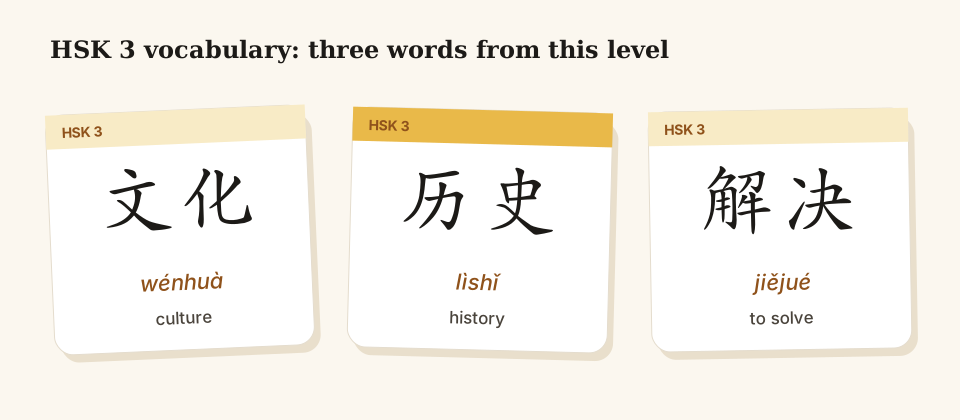
| 变化 | biànhuà | change; to change |
| 表演 | biǎoyǎn | to perform; performance |
| 别的 | biéde | other |
| 别人 | biérén | other people |
| 笔记 | bǐjì | notes |
| 比较 | bǐjiào | relatively; to compare |
| 笔记本 | bǐjìběn | notebook; laptop |
| 冰 | bīng | ice |
| 病人 | bìngrén | patient, sick person |
| 宾馆 | bīnguǎn | hotel, guesthouse |
| 冰箱 | bīngxiāng | fridge |
| 比如 | bǐrú | for example |
| 比赛 | bǐsài | match, competition |
| 必须 | bìxū | must |
| 不但 | búdàn | not only |
| 不见 | bú jiàn | to not see; to be missing |
| 不久 | bùjiǔ | soon; not long after |
| 不同 | bùtóng | different |
| 不行 | bùxíng | won't do, not OK |
| 不用 | búyòng | no need to |
| 才 | cái | only then; just |
| 菜单 | càidān | menu |
| 参加 | cānjiā | to take part |
| 草 | cǎo | grass |
| 草地 | cǎodì | lawn |
| 层 | céng | floor, layer |
| 查 | chá | to check, to look up |
| 差 | chà | poor, bad; to lack |
| 差不多 | chàbuduō | almost; about the same |
| 尝 | cháng | to taste |
| 常 | cháng | often |
| 常常 | chángcháng | often |
| 常见 | chángjiàn | common |
| 常用 | chángyòng | commonly used |
| 成绩 | chéngjì | result, grade |
| 城市 | chéngshì | city |
| 衬衫 | chènshān | shirt |
| 迟到 | chídào | to be late |
| 船 | chuán | boat, ship |
| 出发 | chūfā | to set off |
| 除了 | chúle | apart from |
| 春天 | chūntiān | spring |
| 出生 | chūshēng | to be born |
| 出院 | chū yuàn | to leave hospital |
| 初中 | chūzhōng | junior secondary school |
| 词典 | cídiǎn | dictionary |
| 聪明 | cōngming | clever |
| 大概 | dàgài | probably; roughly |
| 带 | dài | to bring, to take |
| 蛋糕 | dàngāo | cake |
| 当然 | dāngrán | of course |
| 担心 | dān xīn | to worry |
| 到处 | dàochù | everywhere |
| 大人 | dàren | adult |
| 打扫 | dǎsǎo | to clean |
| 打算 | dǎsuan | to plan; plan |
| 大小 | dàxiǎo | size |
| 大熊猫 | dàxióngmāo | giant panda |
| 大衣 | dàyī | overcoat |
| 得到 | dédào | to get, to obtain |
| 得分 | dé fēn | to score |
| 的话 | dehuà | if (…) |
| 灯 | dēng | lamp, light |
| 电 | diàn | electricity |
| 电梯 | diàntī | lift, elevator |
| 地点 | dìdiǎn | place, location |
| 地方 | dìfang | place |
| 地图 | dìtú | map |
| 丢 | diū | to lose |
| 东 | dōng | east |
| 东北 | dōngběi | northeast |
| 懂得 | dǒngde | to understand |
| 东方 | dōngfāng | the East |
| 东南 | dōngnán | southeast |
| 冬天 | dōngtiān | winter |
| 动物 | dòngwù | animal |
| 动物园 | dòngwùyuán | zoo |
| 短 | duǎn | short |
| 段 | duàn | section, paragraph |
| 短裤 | duǎnkù | shorts |
| 锻炼 | duànliàn | to exercise |
| 对话 | duìhuà | dialogue |
| 饿 | è | hungry |
| 耳朵 | ěrduo | ear |
| 耳机 | ěrjī | earphones |
| 而且 | érqiě | moreover; and also |
| 发 | fā | to send |
| 放 | fàng | to put, to place |
| 方便 | fāngbiàn | convenient |
| 方便面 | fāngbiànmiàn | instant noodles |
| 方法 | fāngfǎ | method |
| 放假 | fàng jià | to have a holiday |
| 方向 | fāngxiàng | direction |
| 放心 | fàng xīn | to be at ease |
| 放学 | fàng xué | school is out |
| 房子 | fángzi | house |
| 发烧 | fā shāo | to have a fever |
| 发生 | fāshēng | to happen |
| 发现 | fāxiàn | to discover |
| 发展 | fāzhǎn | to develop; development |
| 风 | fēng | wind |
| 封 | fēng | (measure word for letters) |
| 分开 | fēnkāi | to separate |
| 附近 | fùjìn | nearby |
| 夫妻 | fūqī | married couple |
| 服务 | fúwù | to serve; service |
| 复习 | fùxí | to review |
| 该 | gāi | should |
| 干 | gān | dry |
| 感到 | gǎndào | to feel |
| 刚 | gāng | just (now) |
| 刚才 | gāngcái | just now |
| 刚刚 | gānggāng | just now |
| 干净 | gānjìng | clean |
| 感冒 | gǎnmào | cold (illness) |
| 感兴趣 | gǎn xìngqù | to be interested |
| 高铁 | gāotiě | high-speed train |
| 更 | gèng | even more |
| 根据 | gēnjù | according to |
| 公斤 | gōngjīn | kilogram |
| 公园 | gōngyuán | park |
| 工作日 | gōngzuòrì | working day |
| 刮 | guā | to blow (wind); to scrape |
| 关 | guān | to close; to turn off |
| 关机 | guān jī | to switch off |
| 关系 | guānxi | relationship |
| 关心 | guānxīn | to care about |
| 关于 | guānyú | about, concerning |
| 关注 | guānzhù | to follow, pay attention |
| 国家 | guójiā | country |
| 过节 | guò jié | to celebrate a festival |
| 故事 | gùshi | story |
| 海 | hǎi | sea |
| 害怕 | hàipà | to be afraid |
| 好多 | hǎoduō | a lot of |
| 好久 | hǎojiǔ | a long time |
| 号码 | hàomǎ | number |
| 好像 | hǎoxiàng | to seem, as if |
| 河 | hé | river |
| 黑板 | hēibǎn | blackboard |
| 合适 | héshì | suitable |
| 后来 | hòulái | afterwards |
| 后年 | hòunián | the year after next |
| 后天 | hòutiān | day after tomorrow |
| 画家 | huàjiā | painter |
| 换 | huàn | to change, to exchange |
| 黄色 | huángsè | yellow |
| 环境 | huánjìng | environment |
| 欢迎 | huānyíng | to welcome |
| 花园 | huāyuán | garden |
| 回答 | huídá | to answer |
| 会议 | huìyì | meeting |
| 或 | huò | or |
| 或者 | huòzhě | or |
| 护照 | hùzhào | passport |
| 鸡 | jī | chicken |
| 极 | jí | extremely |
| 急 | jí | urgent; anxious |
| 记 | jì | to remember; to note down |
| 季 | jì | season |
| 加 | jiā | to add |
| 检查 | jiǎnchá | to check; check-up |
| 坚持 | jiānchí | to persist |
| 简单 | jiǎndān | simple |
| 讲 | jiǎng | to speak, to explain |
| 健康 | jiànkāng | healthy; health |
| 见面 | jiàn miàn | to meet |
| 角 | jiǎo | corner; 0.1 yuan |
| 脚 | jiǎo | foot |
| 假期 | jiàqī | holiday |
| 接 | jiē | to pick up; to receive |
| 街 | jiē | street |
| 节 | jié | festival; (measure word for lessons) |
| 借 | jiè | to borrow; to lend |
| 结婚 | jié hūn | to marry |
| 解决 | jiějué | to solve |
| 姐妹 | jiěmèi | sisters |
| 节目 | jiémù | programme |
| 节日 | jiérì | festival, holiday |
| 结束 | jiéshù | to end |
| 几乎 | jīhū | almost |
| 机会 | jīhuì | opportunity |
| 季节 | jìjié | season |
| 斤 | jīn | jin (half a kilo) |
| 经过 | jīngguò | to pass by; through |
| 经理 | jīnglǐ | manager |
| 久 | jiǔ | long (time) |
| 酒 | jiǔ | alcohol, wine |
| 旧 | jiù | old (things) |
| 句 | jù | sentence; (measure word) |
| 决定 | juédìng | to decide |
| 句子 | jùzi | sentence |
| 卡 | kǎ | card |
| 开花 | kāi huā | to blossom |
| 开会 | kāi huì | to have a meeting |
| 开机 | kāi jī | to switch on |
| 开心 | kāixīn | happy |
| 看来 | kànlái | it seems |
| 可 | kě | but; can |
| 渴 | kě | thirsty |
| 刻 | kè | quarter (of an hour) |
| 可爱 | kě'ài | cute, lovely |
| 课本 | kèběn | textbook |
| 客人 | kèrén | guest |
| 可是 | kěshì | but |
| 课文 | kèwén | text (of a lesson) |
| 空调 | kōngtiáo | air conditioning |
| 哭 | kū | to cry |
| 筷子 | kuàizi | chopsticks |
| 矿泉水 | kuàngquánshuǐ | mineral water |
| 来自 | láizì | to come from |
| 蓝 | lán | blue |
| 老 | lǎo | old |
| 老人 | lǎorén | elderly person |
| 脸 | liǎn | face |
| 练 | liàn | to practise |
| 辆 | liàng | (measure word for vehicles) |
| 凉快 | liángkuai | pleasantly cool |
| 练习 | liànxí | to practise; exercise |
| 聊 | liáo | to chat |
| 了解 | liǎojiě | to understand, to know about |
| 聊天儿 | liáo tiānr | to chat |
| 离开 | líkāi | to leave |
| 邻居 | línjū | neighbour |
| 历史 | lìshǐ | history |
| 留学 | liú xué | to study abroad |
| 留学生 | liúxuéshēng | international student |
| 礼物 | lǐwù | present, gift |
| 楼梯 | lóutī | stairs |
| 路边 | lùbiān | roadside |
| 路口 | lùkǒu | crossroads |
| 马 | mǎ | horse |
| 马路 | mǎlù | road, street |
| 满意 | mǎnyì | satisfied |
| 毛 | máo | hair, fur; 0.1 yuan |
| 马上 | mǎshàng | immediately |
| 米 | mǐ | rice (uncooked); metre |
| 面前 | miànqián | in front of |
| 明白 | míngbai | to understand; clear |
| 名单 | míngdān | list of names |
| 名人 | míngrén | famous person |
| 南 | nán | south |
| 难 | nán | difficult |
| 南方 | nánfāng | the south |
| 难过 | nánguò | sad |
| 难看 | nánkàn | ugly |
| 男人 | nánrén | man |
| 男生 | nánshēng | male student, boy |
| 难题 | nántí | difficult problem |
| 难听 | nántīng | unpleasant to hear |
| 年级 | niánjí | year (at school), grade |
| 年轻 | niánqīng | young |
| 牛 | niú | cow, ox |
| 努力 | nǔlì | to work hard |
| 女人 | nǚrén | woman |
| 女生 | nǚshēng | female student, girl |
| 爬 | pá | to climb |
| 怕 | pà | to fear |
| 拍照 | pāi zhào | to take a photo |
| 胖 | pàng | fat, chubby |
| 盘子 | pánzi | plate |
| 啤酒 | píjiǔ | beer |
| 平时 | píngshí | usually |
| 瓶子 | píngzi | bottle |
| 骑 | qí | to ride |
| 起 | qǐ | to rise, to get up |
| 铅笔 | qiānbǐ | pencil |
| 前年 | qiánnián | the year before last |
| 前天 | qiántiān | day before yesterday |
| 汽车 | qìchē | car |
| 起飞 | qǐfēi | to take off |
| 奇怪 | qíguài | strange |
| 清楚 | qīngchu | clear |
| 请假 | qǐng jià | to ask for leave |
| 请客 | qǐng kè | to treat (someone) |
| 其实 | qíshí | actually |
| 其他 | qítā | other |
| 球场 | qiúchǎng | sports field, court |
| 秋天 | qiūtiān | autumn |
| 裙子 | qúnzi | skirt |
| 然后 | ránhòu | then, afterwards |
| 认得 | rènde | to recognise |
| 认为 | rènwéi | to think, to believe |
| 认真 | rènzhēn | serious, conscientious |
| 热情 | rèqíng | warm, enthusiastic |
| 容易 | róngyì | easy |
| 如果 | rúguǒ | if |
| 伞 | sǎn | umbrella |
| 扫 | sǎo | to sweep |
| 沙发 | shāfā | sofa |
| 山 | shān | mountain |
| 上衣 | shàngyī | top, jacket |
| 勺子 | sháozi | spoon |
| 身边 | shēnbiān | beside (someone) |
| 声 | shēng | sound, voice |
| 身高 | shēngāo | height (of a person) |
| 生活 | shēnghuó | life; to live |
| 生气 | shēng qì | to be angry |
| 声音 | shēngyīn | sound, voice |
| 市 | shì | city |
| 试 | shì | to try |
| 室 | shì | room |
| 世界 | shìjiè | world |
| 收 | shōu | to receive, to accept |
| 受 | shòu | to receive; to suffer |
| 瘦 | shòu | thin |
| 收到 | shōudào | to receive |
| 受到 | shòudào | to receive |
| 树 | shù | tree |
| 刷 | shuā | to brush |
| 双 | shuāng | pair |
| 水平 | shuǐpíng | level |
| 叔叔 | shūshu | uncle |
| 数学 | shùxué | mathematics |
| 司机 | sījī | driver |
| 四季 | sìjì | the four seasons |
| 太阳 | tàiyáng | sun |
| 糖 | táng | sugar; sweets |
| 特别 | tèbié | special; especially |
| 甜 | tián | sweet |
| 跳 | tiào | to jump |
| 提高 | tígāo | to improve |
| 挺 | tǐng | quite |
| 听说 | tīngshuō | to hear (that) |
| 体育 | tǐyù | sports, PE |
| 体育馆 | tǐyùguǎn | sports hall |
| 同事 | tóngshì | colleague |
| 同意 | tóngyì | to agree |
| 头发 | tóufa | hair |
| 腿 | tuǐ | leg |
| 突然 | tūrán | suddenly |
| 图书馆 | túshūguǎn | library |
| 外地 | wàidì | other parts of the country |
| 外卖 | wàimài | takeaway, delivery |
| 外语 | wàiyǔ | foreign language |
| 碗 | wǎn | bowl |
| 完成 | wánchéng | to complete |
| 晚点 | wǎn diǎn | delayed |
| 忘记 | wàngjì | to forget |
| 网球 | wǎngqiú | tennis |
| 网站 | wǎngzhàn | website |
| 晚会 | wǎnhuì | evening party |
| 为 | wèi | for |
| 为了 | wèile | in order to |
| 卫生间 | wèishēngjiān | bathroom, toilet |
| 文化 | wénhuà | culture |
| 屋子 | wūzi | room |
| 西 | xī | west |
| 喜爱 | xǐ'ài | to love, to like |
| 先 | xiān | first |
| 向 | xiàng | towards |
| 像 | xiàng | to resemble; like |
| 相机 | xiàngjī | camera |
| 香蕉 | xiāngjiāo | banana |
| 相信 | xiāngxìn | to believe |
| 箱子 | xiāngzi | box, suitcase |
| 小区 | xiǎoqū | residential compound |
| 小心 | xiǎoxīn | careful |
| 校园 | xiàoyuán | campus |
| 校长 | xiàozhǎng | head teacher; president |
| 夏天 | xiàtiān | summer |
| 西北 | xīběi | northwest |
| 鞋 | xié | shoe |
| 西方 | xīfāng | the West |
| 西瓜 | xīguā | watermelon |
| 习惯 | xíguàn | habit; to be used to |
| 信 | xìn | letter; to believe |
| 西南 | xīnán | southwest |
| 行 | xíng | OK; to walk |
| 行李 | xíngli | luggage |
| 兴趣 | xìngqù | interest |
| 心里 | xīnli | in one's heart |
| 新年 | xīnnián | New Year |
| 新闻 | xīnwén | news |
| 新鲜 | xīnxiān | fresh |
| 信用卡 | xìnyòngkǎ | credit card |
| 休假 | xiū jià | to take leave |
| 洗衣机 | xǐyījī | washing machine |
| 洗澡 | xǐ zǎo | to shower, to bathe |
| 选 | xuǎn | to choose |
| 选择 | xuǎnzé | to choose; choice |
| 学期 | xuéqī | term, semester |
| 需要 | xūyào | to need |
| 牙 | yá | tooth |
| 羊 | yáng | sheep, goat |
| 养 | yǎng | to raise, to keep (pets) |
| 要求 | yāoqiú | to demand; requirement |
| 牙刷 | yáshuā | toothbrush |
| 页 | yè | page |
| 一般 | yìbān | usually; ordinary |
| 一边 | yìbiān | while (doing) |
| 一定 | yídìng | certainly |
| 一共 | yígòng | in total |
| 以后 | yǐhòu | after; in future |
| 一块儿 | yíkuàir | together |
| 应该 | yīnggāi | should |
| 影响 | yǐngxiǎng | influence; to affect |
| 银行 | yínháng | bank |
| 银行卡 | yínhángkǎ | bank card |
| 饮料 | yǐnliào | drink |
| 音乐 | yīnyuè | music |
| 以前 | yǐqián | before |
| 以上 | yǐshàng | above, more than |
| 以外 | yǐwài | apart from |
| 以为 | yǐwéi | to (wrongly) think |
| 以下 | yǐxià | below, less than |
| 一样 | yíyàng | the same |
| 一直 | yìzhí | all along; straight |
| 用 | yòng | to use |
| 又 | yòu | again |
| 有关 | yǒuguān | related to |
| 邮件 | yóujiàn | mail, email |
| 游客 | yóukè | tourist |
| 有名 | yǒumíng | famous |
| 游戏 | yóuxì | game |
| 邮箱 | yóuxiāng | mailbox; email address |
| 有用 | yǒuyòng | useful |
| 员 | yuán | member, staff |
| 园 | yuán | garden, park |
| 愿意 | yuànyì | to be willing |
| 遇到 | yùdào | to run into |
| 越 | yuè | the more… |
| 月亮 | yuèliang | moon |
| 遇见 | yùjiàn | to meet (by chance) |
| 羽毛球 | yǔmáoqiú | badminton |
| 运动会 | yùndònghuì | sports meeting |
| 运动员 | yùndòngyuán | athlete |
| 语言 | yǔyán | language |
| 雨衣 | yǔyī | raincoat |
| 脏 | zāng | dirty |
| 咱们 | zánmen | we (including you) |
| 怎么办 | zěnme bàn | what to do |
| 怎样 | zěnyàng | how |
| 张 | zhāng | (measure word for flat things) |
| 照 | zhào | to shine; to take (photo) |
| 照顾 | zhàogu | to take care of |
| 着急 | zháojí | worried, anxious |
| 照片 | zhàopiàn | photo |
| 照相 | zhào xiàng | to take a photo |
| 纸 | zhǐ | paper |
| 直到 | zhídào | until |
| 只能 | zhǐ néng | can only |
| 只是 | zhǐshì | only, just |
| 只要 | zhǐyào | as long as |
| 只有 | zhǐyǒu | only |
| 中 | zhōng | middle; in |
| 种 | zhǒng | kind, type |
| 中间 | zhōngjiān | middle |
| 重要 | zhòngyào | important |
| 终于 | zhōngyú | finally |
| 周末 | zhōumò | weekend |
| 主要 | zhǔyào | main |
| 注意 | zhùyì | to pay attention |
| 住院 | zhù yuàn | to be in hospital |
| 子 | zǐ | child; (noun suffix) |
| 字典 | zìdiǎn | character dictionary |
| 自行车 | zìxíngchē | bicycle |
| 总 | zǒng | always; total |
| 总是 | zǒngshì | always |
| 嘴 | zuǐ | mouth |
| 最好 | zuìhǎo | best; had better |
| 最后 | zuìhòu | finally, last |
| 最近 | zuìjìn | recently |
| 做客 | zuò kè | to be a guest |
| 作业 | zuòyè | homework |
The video loads from YouTube when you press play.
How long does it take to prepare for HSK 3?
From zero, about 300–450 hours, a year to a year and a half at two lessons a week. After HSK 2, roughly six to nine months. The extra time goes mostly into reading characters and building sentences. See how long it takes to learn Chinese.
After HSK 3
HSK 4 doubles the vocabulary again and is the level many universities and employers ask for. My HSK preparation course prepares you for both HSK 3 and the HSKK.
Word list: the official HSK 3.0 vocabulary (2025 syllabus), as compiled in the open complete-hsk-vocabulary project (MIT licence). Pinyin checked and meanings written by KeSong Chinese.
Frequently asked questions
Is HSK 3 hard?
HSK 3 is the first real challenge in the series. Pinyin disappears from the reading paper, there is a writing section, and you take the HSKK speaking test at the same time. The vocabulary doubles to about 1,000 words. With a steady year or more of study and focused exam practice, most adult learners pass it well.
How long does it take to prepare for HSK 3?
From zero, about 300–450 hours in total, roughly a year to a year and a half with two lessons a week. After HSK 2, plan another six to nine months. Reading characters without pinyin is usually what takes longest.
Do I need to take the HSKK with HSK 3?
At the Dutch test centres, yes: since January 2025 HSK 3 candidates register for the HSKK Elementary speaking test at the same time. You repeat sentences, describe pictures and answer questions, recorded on a computer. It takes about 20 minutes.
What is in the HSK 3 writing section?
In the current format there are ten writing items: five where you put given words in the right order to make a sentence, and five where you write the missing character, with its pinyin shown. In the internet-based test you type the characters using pinyin input.
Prepare for HSK 3 with Zoey
Reading without pinyin, writing sentences and the HSKK: focused HSK 3 preparation, online or in Amsterdam.
Keep reading
-
HSK 4
Word list, grammar, exam format and sample questions.
-
HSK 2
Word list, grammar, exam format and sample questions.
-
HSK preparation
Targeted preparation for HSK 1–6 and HSKK, including the new HSK 3.0.
-
Chinese grammar basics
Word order, 了, measure words, questions and the patterns that matter first.
About the author
Zoey (Ziqiao Zang, 臧子乔) has taught Chinese as a foreign language since 2011 and in the Netherlands since 2016. She holds a Master of Teaching Chinese to Speakers of Other Languages from Zhejiang Normal University and set up and ran an official HSK online exam centre with more than 250 candidates.