Chinese characters for beginners, explained by a teacher
Chinese characters (汉字 hànzì) are the writing system of Chinese: thousands of symbols that each stand for a syllable with a meaning, not for a letter. There is no Chinese alphabet. Most characters combine a part that hints at the meaning with a part that hints at the sound, and once you see that logic, learning to read Chinese becomes far less mysterious.
 By Zoey (Ziqiao Zang), Chinese teacher since 2011
How the Chinese writing system works
There is no Chinese alphabet. Where English writes sounds with letters, Chinese writes syllables with characters. Each character is pronounced as one syllable and usually carries a meaning of its own. 人rén means “person”, 口kǒu means “mouth”, 大dà means “big”. Words are made of one or more characters: 大人dàrén “adult” is literally “big person”.
People sometimes call Chinese characters ideograms or pictograms. That is only partly true. There are four main types:
| Type | How it works | Examples |
|---|---|---|
| Pictographs | A simplified drawing of a thing | 人 person, 山 mountain, 日 sun, 月 moon, 木 tree |
| Simple ideographs | An abstract idea shown with a sign | 上 up, 下 down, 一 one, 三 three |
| Compound ideographs | Two meanings combined into a new one | 休 rest (a person 亻 leaning on a tree 木), 明 bright (sun 日 + moon 月) |
| Phonetic-semantic compounds | One part gives the meaning, the other the sound | 妈 mā mother (woman 女 + sound 马 mǎ), 河 hé river (water 氵 + sound 可 kě) |
The fourth type is by far the largest group: around 80 percent of characters are phonetic-semantic compounds. That is good news for learners. Once you know a few hundred building blocks, new characters stop being random pictures and start being combinations you can decode.
Radicals: the building blocks
A radical (部首 bùshǒu) is the part of a character under which it is listed in a dictionary, and very often it hints at the meaning. Characters with the water radical 氵 tend to relate to water: 河hé river, 海hǎi sea, 洗xǐ to wash. Characters with the speech radical 讠 relate to language: 说shuō to speak, 话huà speech, 语yǔ language.
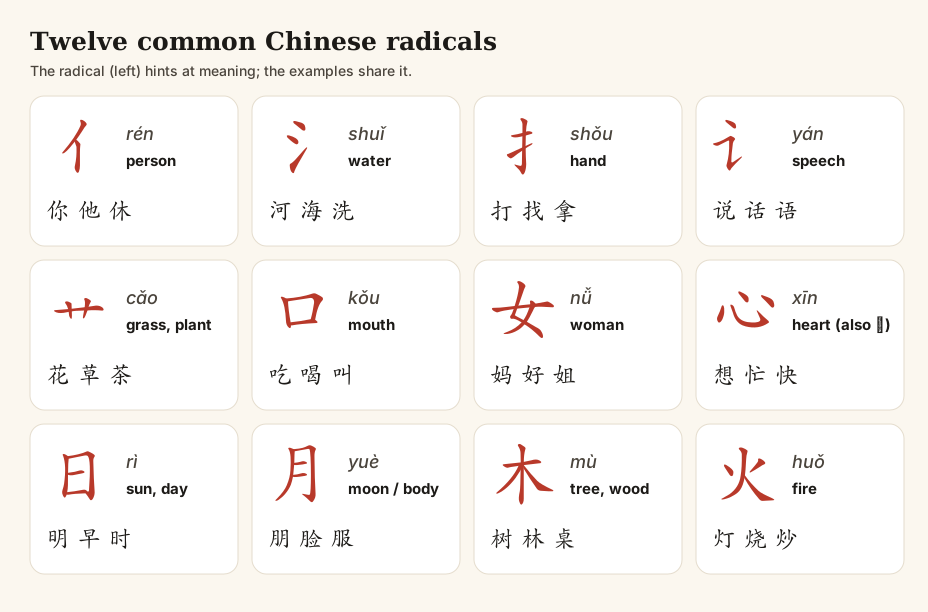
Modern dictionaries use about 200 radicals. You do not need to learn them all at once; the twenty or thirty most frequent cover a large share of the characters a beginner meets.
The basic strokes
Every character is written with a small set of basic strokes. Knowing their names helps when a teacher explains a character:
| Stroke | Name | Description |
|---|---|---|
| 一 | 横 héng | horizontal, left to right |
| 丨 | 竖 shù | vertical, top to bottom |
| 丿 | 撇 piě | falling to the left |
| 丶 | 点 diǎn | dot |
| ㇏ | 捺 nà | falling to the right |
| ㇀ | 提 tí | rising, bottom left to top right |
| 𠃍 | 折 zhé | turning stroke |
| 亅 | 钩 gōu | hook |
Chinese stroke order: how to write Chinese characters
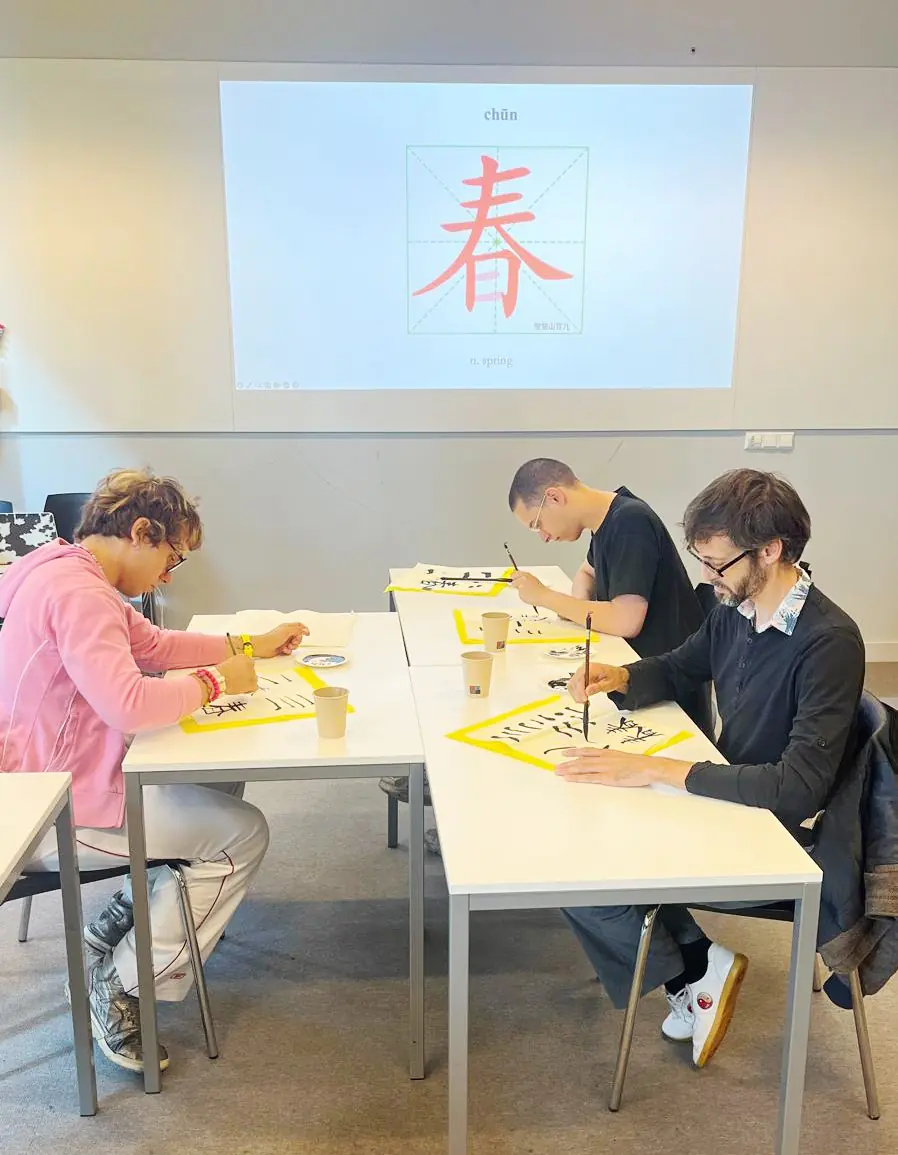
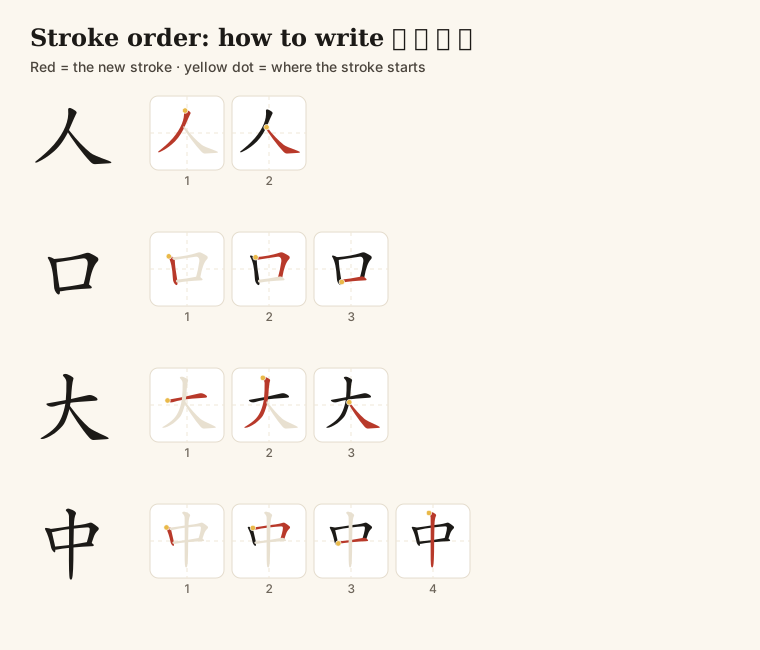
Stroke order is the fixed sequence in which a character’s strokes are written. It is not a formality: correct stroke order makes your handwriting readable, helps you remember characters, and is how handwriting input on phones recognises what you write. The main rules:
- Top before bottom: 三 is written from the top line down.
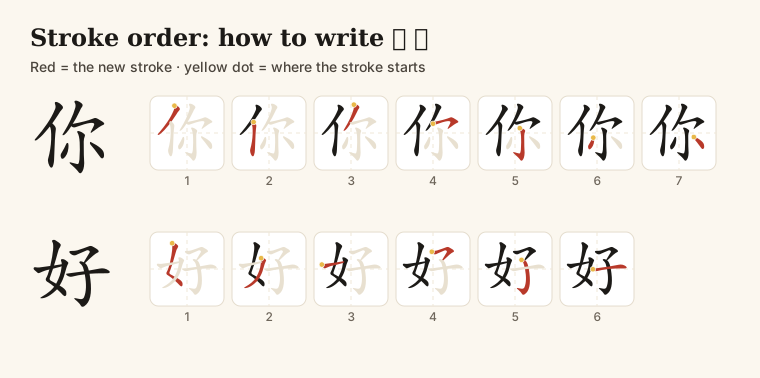
- Left before right: in 你, the left part 亻 comes first.
- Horizontal before vertical when they cross: 十 starts with the horizontal stroke.
- Left-falling before right-falling: in 人, the stroke to the left comes first.
- Outside before inside, close last: in 国, write the frame, then the inside, then the bottom line.
- Centre before sides: in 小, the middle hook comes first.
How to write your first characters
Start with characters that are simple and useful. Here is a sequence I use with beginners:
- 人 rén, person: two strokes. Notice the left stroke is longer.
- 口 kǒu, mouth: three strokes. The second stroke is one continuous turn; the bottom line closes the box last.
- 大 dà, big: a person 人 with outstretched arms (一). Three strokes.
- 中 zhōng, middle: a box 口 with a line through the centre: the first character of 中国 (China) and 中文 (Chinese).
- 你好 nǐ hǎo, hello: your first word in characters. 你 is “person” 亻 + 尔; 好 is “woman” 女 + “child” 子.
Use squared paper (or a character practice notebook with 田字格 grids), write each character slowly five to ten times while saying it aloud, and then use it in a word. Writing from memory a day later is far more effective than copying twenty times in a row.
Simplified vs traditional Chinese
In the 1950s and 60s the People’s Republic of China introduced simplified Chinese characters to make reading and writing easier. Many common characters lost strokes: 學 became 学 (study), 國 became 国 (country), 語 became 语 (language).
| Simplified | Traditional | Meaning |
|---|---|---|
| 学 | 學 | study |
| 国 | 國 | country |
| 语 | 語 | language |
| 马 | 馬 | horse |
| 门 | 門 | door |
| 见 | 見 | to see |
| 书 | 書 | book |
| 爱 | 愛 | love |
Where each is used: simplified in mainland China, Singapore and Malaysia; traditional in Taiwan, Hong Kong and Macau. Is Mandarin simplified or traditional? Neither: Mandarin is the spoken language, and it can be written in either script. For most learners, simplified is the practical choice: it is used by the large majority of Chinese readers and in the HSK. If you plan to live in Taiwan or work mainly with Hong Kong, consider traditional. See also Mandarin vs Cantonese.
Chinese vs Japanese characters
Japanese borrowed Chinese characters more than 1,500 years ago and calls them kanji (from 汉字 hànzì). Many look the same and have related meanings: 山 (mountain), 水 (water), 人 (person). Important differences:
- Pronunciation: the same character sounds completely different. 人 is rén in Mandarin, hito or jin in Japanese.
- Shapes: Japan simplified some characters differently from China, so 学 in China is 学 in Japan too, but 图 (China) is 図 (Japan).
- Mixed scripts: Japanese combines kanji with two syllabaries, hiragana and katakana. Chinese uses characters only.
- Readings: a Japanese kanji often has several readings; a Chinese character usually has one.
The 100 most common Chinese characters
These 100 characters are among the most frequent in modern written Chinese. Together they make up a large share of any text you will read. Press ▶ to hear each one.
| ▶ | Character | Pinyin | Meaning |
|---|---|---|---|
| 的 | de | possessive particle ("of", 's) | |
| 一 | yī | one | |
| 是 | shì | to be | |
| 不 | bù | not, no | |
| 了 | le | particle: completed action / change | |
| 在 | zài | at, in; to be (somewhere) | |
| 人 | rén | person, people | |
| 有 | yǒu | to have; there is | |
| 我 | wǒ | I, me | |
| 他 | tā | he, him | |
| 这 | zhè | this | |
| 个 | gè | general measure word | |
| 们 | men | plural suffix for people | |
| 中 | zhōng | middle, centre; China | |
| 来 | lái | to come | |
| 上 | shàng | up, on, above; previous | |
| 大 | dà | big, large | |
| 为 | wèi | for, because of | |
| 和 | hé | and, with | |
| 国 | guó | country, nation | |
| 地 | dì | earth, ground; adverbial particle | |
| 到 | dào | to arrive; to, until | |
| 以 | yǐ | with, by means of | |
| 说 | shuō | to speak, to say | |
| 时 | shí | time, hour | |
| 要 | yào | to want; will; must | |
| 就 | jiù | then, just, right away | |
| 出 | chū | to go out, to exit | |
| 会 | huì | can (learned skill); will; meeting | |
| 可 | kě | can, may; but | |
| 也 | yě | also, too | |
| 你 | nǐ | you | |
| 对 | duì | correct; towards, to | |
| 生 | shēng | to be born; life; raw | |
| 能 | néng | can, to be able to | |
| 而 | ér | and, but (written style) | |
| 子 | zǐ | child; noun suffix | |
| 那 | nà | that | |
| 得 | de / dé | complement particle; to obtain | |
| 于 | yú | in, at, than (written style) | |
| 着 | zhe | particle: ongoing state | |
| 下 | xià | down, below; next | |
| 自 | zì | self; from | |
| 之 | zhī | possessive particle (classical) | |
| 年 | nián | year | |
| 过 | guò | to pass; particle: experience | |
| 发 | fā | to send, to issue, to develop | |
| 后 | hòu | after, behind | |
| 作 | zuò | to do, to make, work | |
| 里 | lǐ | inside | |
| 用 | yòng | to use | |
| 道 | dào | road, way; to say | |
| 行 | xíng | to walk; OK, all right | |
| 所 | suǒ | place; that which | |
| 然 | rán | so, like that | |
| 家 | jiā | home, family | |
| 种 | zhǒng | kind, type | |
| 事 | shì | matter, thing, affair | |
| 成 | chéng | to become, to succeed | |
| 方 | fāng | square; direction; side | |
| 多 | duō | many, much | |
| 经 | jīng | to pass through; classic | |
| 么 | me | suffix in 什么, 怎么 | |
| 去 | qù | to go | |
| 法 | fǎ | law, method | |
| 学 | xué | to study, to learn | |
| 如 | rú | like, as, if | |
| 都 | dōu | all, both | |
| 同 | tóng | same, together | |
| 现 | xiàn | now; to appear | |
| 当 | dāng | when; to serve as | |
| 没 | méi | not (have), did not | |
| 动 | dòng | to move | |
| 面 | miàn | face, side; noodles | |
| 起 | qǐ | to rise, to start | |
| 看 | kàn | to look, to watch, to read | |
| 定 | dìng | to fix, to decide; definitely | |
| 天 | tiān | sky, day | |
| 分 | fēn | to divide; minute; point | |
| 还 | hái | still, also | |
| 进 | jìn | to enter | |
| 好 | hǎo | good, well | |
| 小 | xiǎo | small, little | |
| 部 | bù | part, department | |
| 其 | qí | his, her, its, their | |
| 些 | xiē | some, a few | |
| 主 | zhǔ | main; host; owner | |
| 样 | yàng | appearance, kind, way | |
| 理 | lǐ | reason, logic; to manage | |
| 心 | xīn | heart, mind | |
| 她 | tā | she, her | |
| 本 | běn | root, origin; measure word for books | |
| 前 | qián | front, before | |
| 开 | kāi | to open, to start, to drive | |
| 但 | dàn | but | |
| 因 | yīn | because, cause | |
| 只 | zhǐ | only | |
| 从 | cóng | from | |
| 想 | xiǎng | to think; to want; to miss | |
| 实 | shí | real, true, solid |
You will notice that many of the most frequent characters are grammar words (的, 了, 着, 们) rather than nouns. That is why learning characters in sentences works better than learning them from lists: the small words only make sense in context.
The “Chinese alphabet”: what learners really mean
When people search for the Chinese alphabet, they usually mean one of two things:
- Pinyin, the official system for writing Chinese pronunciation with Latin letters. 你好 is written nǐ hǎo in pinyin. Learners use it from day one, and you type Chinese on a phone or computer by typing pinyin and choosing the character. Pinyin is the closest thing to a Chinese alphabet. Read pinyin and the four tones.
- “Translating” A–Z into characters, for example for a tattoo or a name. Chinese has no letters to translate, but names can be transcribed with characters that sound similar. Choosing good characters for a name is an art; see Chinese names.
How many Chinese characters do you need?
| Characters | What you can read | Level |
|---|---|---|
| ~250 | Simple sentences, signs, menus with help | HSK 1 (3.0) |
| ~650 | Short everyday texts, messages | HSK 3 (3.0) |
| ~1,100 | Most everyday material with a dictionary | HSK 4 (3.0) |
| ~1,900 | Articles and simple books | HSK 6 (3.0) |
| 2,500–3,000 | Newspapers and novels comfortably | Educated native reading |
The amount of Chinese characters in existence is far larger, but about 2,500 characters cover roughly 98 percent of everyday written text. China’s official list of standard characters contains 8,105.
How long does it take to learn to read Chinese?
To read simple texts, about 300–600 characters, most adults need their first year. Everyday reading at 1,000–1,500 characters takes two to three years part-time; reading a newspaper comfortably takes four to six years of regular study. The best way to learn to read Chinese is to combine three things: spaced-repetition flashcards for recognition, graded readers or short stories at your level, and writing the most important characters by hand. For a full timeline, see how long it takes to learn Chinese.
Learn Chinese characters with a teacher
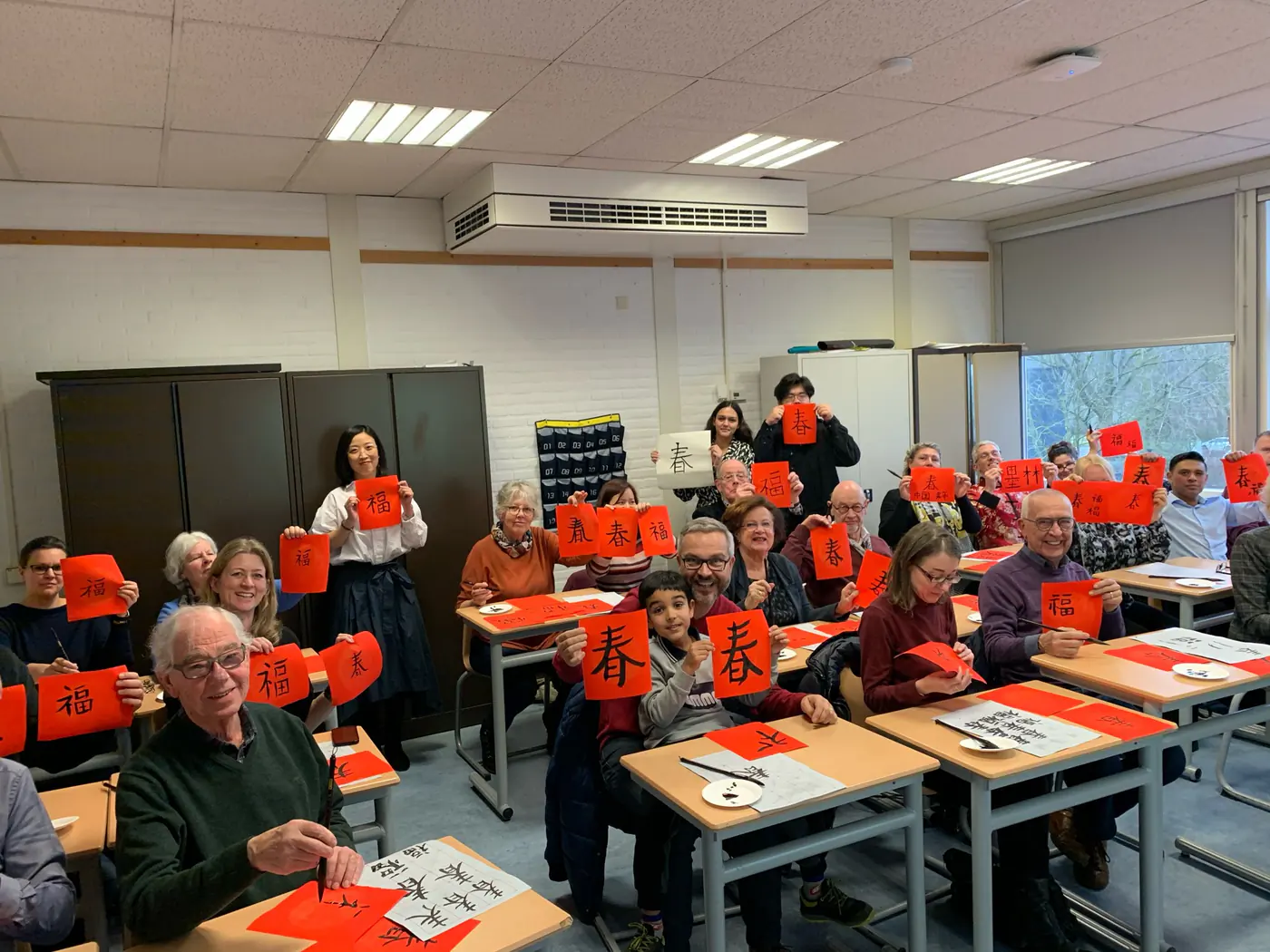
Characters are where many self-taught learners give up, usually because they try to memorise shapes instead of understanding components. In my course for beginners characters are introduced from the second week, a few at a time, always in words you are already saying aloud. By the end of the first year you will read several hundred, and understand how the next thousand work.
Frequently asked questions
What are Chinese characters called?
In Chinese they are called 汉字 (hànzì), literally "Han characters", after the Han dynasty and the Han Chinese. In English they are also called Chinese characters, hanzi or sinograms. The same characters are used in Japanese, where they are called kanji, and historically in Korean (hanja) and Vietnamese.
How long would it take to learn to read Chinese?
To read simple texts you need about 300–600 characters, which most adults learn in their first year. Reading everyday material like menus, signs and messages takes about 1,000–1,500 characters, two to three years for a part-time learner. Reading a newspaper comfortably needs 2,500–3,000 characters, typically four to six years of regular study.
How many letters does the Chinese alphabet have?
None, because Chinese has no alphabet. Each character represents a syllable with a meaning. What learners often call the "Chinese alphabet" is pinyin, the official romanisation system, which uses the 26 Latin letters plus ü and tone marks to show how characters are pronounced.
Should I learn simplified or traditional characters?
Mandarin is a spoken language and can be written in either. Mainland China and Singapore use simplified characters; Taiwan, Hong Kong and Macau use traditional characters. Most learners, and the HSK exam, use simplified characters. Once you know one set well, learning to read the other takes a few months.
How many Chinese characters are there?
Historical dictionaries list more than 47,000 characters, most of them rare or obsolete. China's official list of standard characters for modern use contains 8,105. About 2,500 characters cover roughly 98 percent of everyday written text, so that is the realistic target for fluent reading.
Learn with Zoey
One-to-one or in a small group, online or in Amsterdam by arrangement. Tell Zoey what you want to achieve and she will suggest a plan.
Keep reading
-
Pinyin and the four tones
A clickable pinyin chart, the four tones, tone pairs and the classic mistakes.
-
Chinese names
How Chinese names work, common surnames, and how to choose your own name.
-
Beginners
Start from zero: pinyin, tones, your first characters and real conversations.
-
Basic Chinese phrases
Hello, thank you, sorry, I love you: with characters, pinyin and audio.
About the author
Zoey (Ziqiao Zang, 臧子乔) has taught Chinese as a foreign language since 2011 and in the Netherlands since 2016. She holds a Master of Teaching Chinese to Speakers of Other Languages from Zhejiang Normal University and set up and ran an official HSK online exam centre with more than 250 candidates.