Chinese business etiquette: what to know before your first meeting
Chinese business etiquette is less about strict rules than about respect, hierarchy and relationships. Hand over business cards with both hands, address people by surname and title, let the host lead at dinner, read a "we will look into it" carefully, and invest in the relationship before the deal. This guide explains the why behind each habit.
 By Zoey (Ziqiao Zang), Chinese teacher since 2011
I teach many professionals who already speak a little Chinese, or who simply want to understand what is happening around the table. Their questions are rarely about grammar. They ask: why did nobody answer my question in the meeting? Why does my host keep ordering more food? Was that “maybe” a yes or a no? This guide gathers the answers to the questions about Chinese business culture I hear most.
One caution first: China is large and changing fast. A tech start-up in Shenzhen works differently from a state-owned enterprise in the north, and younger managers who studied abroad may be very direct. Treat what follows as the default, and watch how your partners behave.
Face and guanxi: the two concepts behind everything
面子 (miànzi), face, is a person’s public dignity and reputation. You give face by showing respect, praising in public and acknowledging someone’s status; you cause someone to lose face by contradicting, criticising or embarrassing them in front of others. That is why problems are often discussed privately, after the meeting, rather than at the table.
关系 (guānxi), relationships, is the network of trust and mutual obligation that makes business possible. Chinese partners often want to know who you are before they commit to what you offer. Shared meals, small favours, keeping your word and staying in touch between deals all build guanxi. Doing business in China without it is possible, but slower.
Business cards
- Offer and receive cards with both hands, with the text facing the other person, and a slight nod.
- Read the card for a moment before putting it away; it shows respect for the person and their position.
- Place received cards on the table in front of you during the meeting, in the order people are seated.
- Don’t write on someone’s card, fold it or put it in your back pocket.
- A card with Chinese on one side, ideally with your Chinese name and title, is a thoughtful touch. See Chinese names on choosing a good one.
This Chinese business card etiquette may feel formal, but it takes five seconds and makes a strong first impression.
Chinese business meeting etiquette
Titles and names. Address people by surname plus title: 王总 (Wáng zǒng, “General Manager Wang”), 李经理 (Lǐ jīnglǐ, “Manager Li”), 张老师 (Zhāng lǎoshī, “Teacher Zhang”). Using a given name alone is too familiar at first.
Hierarchy. The most senior person usually enters first, sits in the seat facing the door or in the middle of the table, and speaks for the delegation. Greet them first. Juniors often say little; that does not mean they have no influence.
Opening. Meetings often begin with small talk and polite phrases. Useful ones:
- 很高兴认识您hěn gāoxìng rènshi nín Pleased to meet you (polite).
- 感谢各位的到来gǎnxiè gèwèi de dàolái Thank you all for coming.
- 请多关照qǐng duō guānzhào I look forward to working with you (literally “please take care of me”).
Decisions. Important decisions are often not made in the meeting itself but afterwards, after internal consultation. Don’t push for a yes at the table; agree on next steps instead.
How “no” sounds in Chinese business
Direct refusals cost face, so “no” is often said indirectly:
| You hear | Literally | Often means |
|---|---|---|
| 我们再研究一下 | we will study it further | not now, possibly never |
| 这个有点难 | this is a little difficult | probably no |
| 原则上没问题 | in principle no problem | yes, but details are open |
| 你看着办 | see what you can do | it depends on tone: trust, a test, or quiet disapproval |
The last one is the subject of my workplace-Chinese video below. For Dutch professionals, used to being very direct, this is often the biggest cultural adjustment: listen for hesitation, follow up privately, and give your partner a way to save face.
The video loads from YouTube when you press play.
Business dinners and toasting
Meals are where relationships are built. Chinese business dinner etiquette in short:
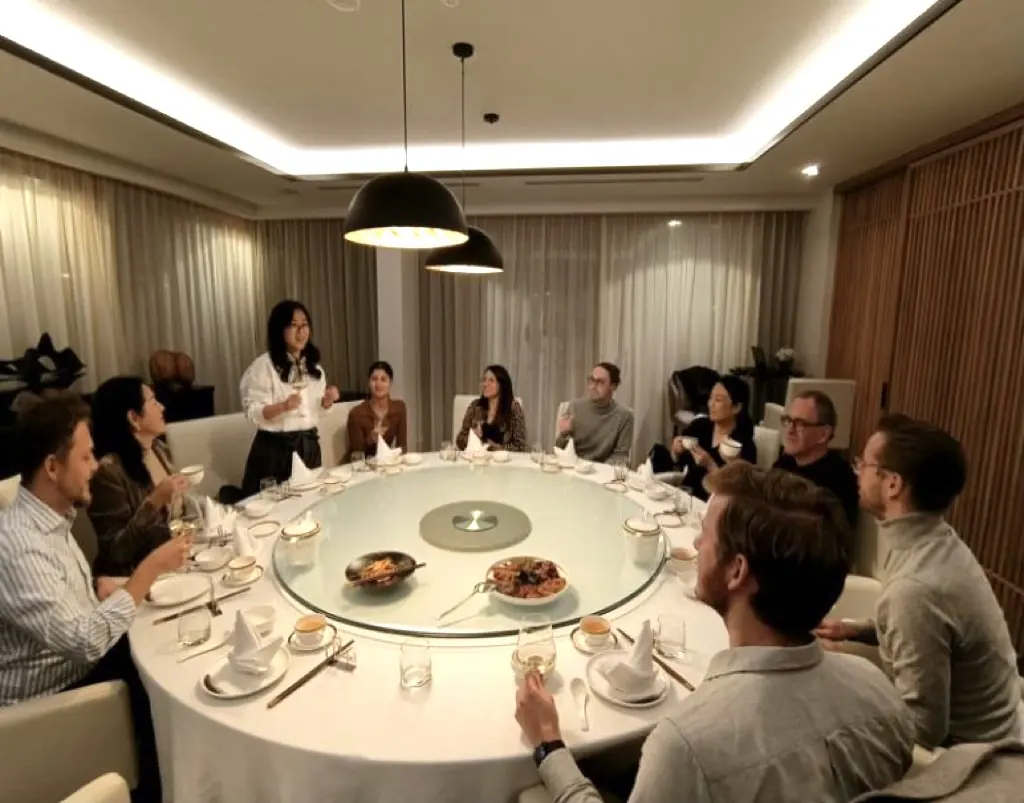
- Seating. The host sits facing the door; the most important guest sits to the host’s right. Wait to be shown your seat.
- Ordering. The host orders, usually more than can be eaten: an empty table would suggest the host was not generous. Leaving a little food on your plate is fine.
- Toasting. The host makes the first toast. When toasting someone senior, hold your glass with both hands and keep the rim lower than theirs. 干杯gānbēi means “dry the glass”; you can sip instead, or say politely 我随意,您干杯wǒ suíyì, nín gānbēi (“I’ll drink as I can, you go ahead”).
- Paying. Chinese colleagues may compete to pay the bill; as a guest, thank your host warmly and offer to host the next meal.
The video loads from YouTube when you press play.
Gifts
Gifts are common when visiting a company or at the end of a successful project.
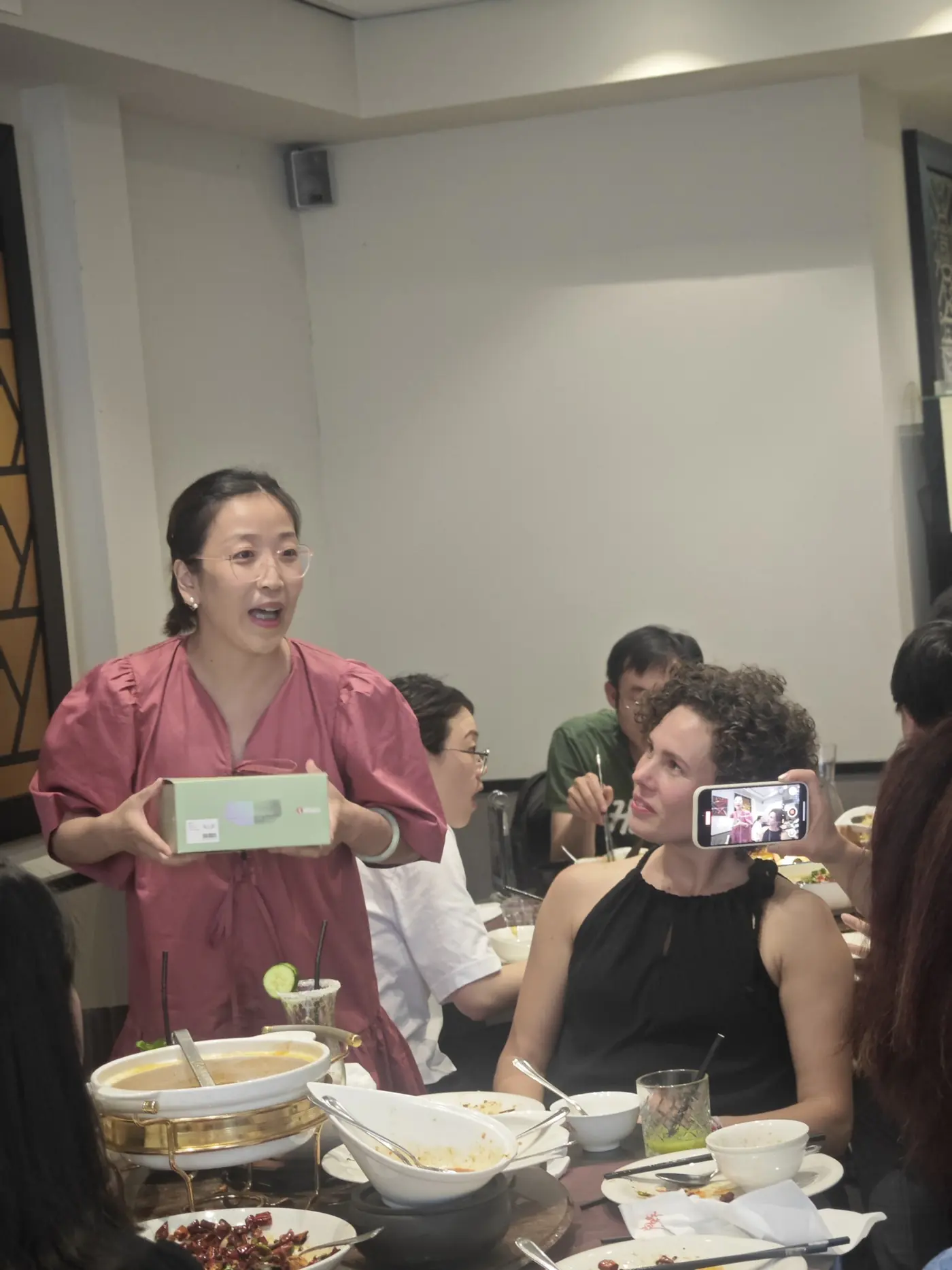
- Good choices: quality products from your own country (Dutch design, chocolate, stroopwafels in nice packaging), books, items with your company logo for a team.
- Avoid: clocks (送钟 “give a clock” sounds like 送终 “attend a deathbed”), knives or scissors (cutting ties), umbrellas (伞 sounds like 散, “split up”), green hats, and anything in sets of four.
- Wrapping: red and gold are festive; avoid white and black.
- Receiving: a gift may be politely refused once or twice before it is accepted, and it is usually not opened in front of the giver.
Communication tools
Much of Chinese business runs on WeChat (微信), from first contact to contracts. Expect quick, short messages, voice messages and group chats. A message saying only 在吗?zài ma? (“are you there?”) usually announces a request. Email is still used for formal matters, but WeChat is where relationships live.
Preparing for business with China
The best preparation combines language and culture. My Business Chinese lessons include a culture module on exactly these topics, and teams can book a culture workshop before a trip or visit. For the broader background, read Chinese culture for learners.
Frequently asked questions
What is the most important rule of Chinese business culture?
Respect for hierarchy and for "face" (面子), the public reputation and dignity of everyone involved. Practically: address senior people first and by title, never criticise anyone in front of others, and give the other side room to say no indirectly. Most other customs follow from this principle.
How do you exchange business cards in China?
Offer and receive cards with both hands, with the text facing the other person. Take a moment to read the card, then place it on the table in front of you during the meeting or in a card holder. Don't write on it or put it in your back pocket. Cards with Chinese on one side are appreciated.
How do you toast at a Chinese business dinner?
Wait for the host to make the first toast. When you toast someone senior, hold your glass with two hands and keep its rim slightly lower than theirs as a sign of respect. 干杯 (gānbēi) literally means "dry the glass"; you may sip instead of emptying it, especially if you explain politely that you don't drink much.
What is guanxi?
关系 (guānxi) means relationships and the trust and mutual obligations that come with them. In Chinese business, guanxi often matters as much as the contract: partners want to know who you are before they commit. Building it takes time, shared meals, keeping your word and staying in touch beyond the deal.
Learn with Zoey
One-to-one or in a small group, online or in Amsterdam by arrangement. Tell Zoey what you want to achieve and she will suggest a plan.
Keep reading
-
Business Chinese
For professionals and teams working with Chinese partners. In-company or online.
-
Chinese culture for learners
Values, everyday habits, festivals and Chinese culture in the Netherlands.
-
Culture workshops
Calligraphy, Chinese New Year and paper-cutting workshops for teams and organisations.
-
Basic Chinese phrases
Hello, thank you, sorry, I love you: with characters, pinyin and audio.
About the author
Zoey (Ziqiao Zang, 臧子乔) has taught Chinese as a foreign language since 2011 and in the Netherlands since 2016. She holds a Master of Teaching Chinese to Speakers of Other Languages from Zhejiang Normal University and set up and ran an official HSK online exam centre with more than 250 candidates.